

How Heat Pumps Create Hot Water Using Air
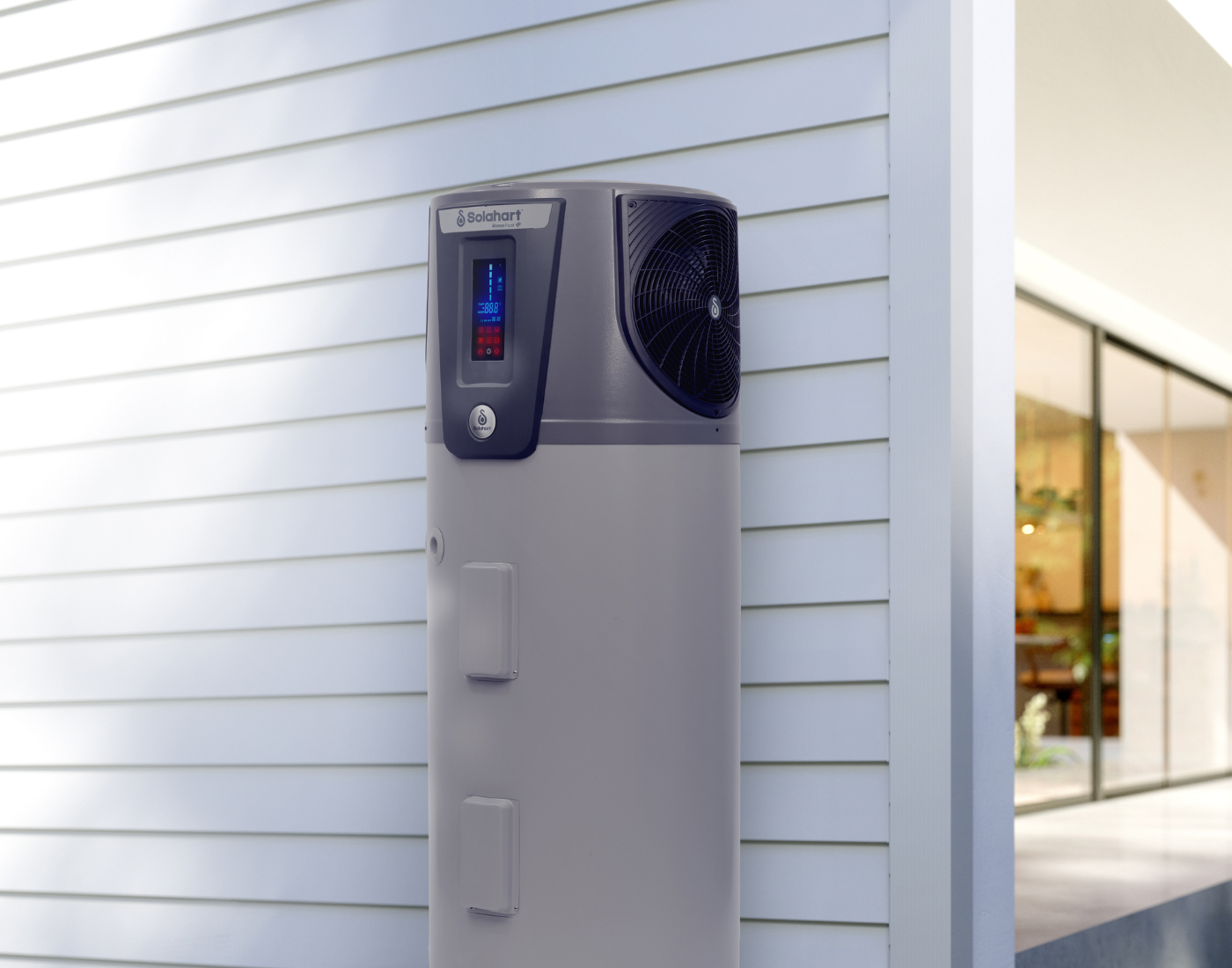
Instead of generating heat directly, as traditional electric systems do, heat pumps use energy already present in the air to heat water. This simple but effective approach is what makes them such an energy-efficient option for many homes.
How does a heat pump work?
A heat pump works by transferring heat from the surrounding air into water stored in a tank.
It operates on a principle similar to a reverse-cycle air-conditioning system. Here is a simplified breakdown:
1. Heat absorption
The system draws in air and captures available heat using a refrigerant. Even in cooler conditions, the air still contains usable heat energy.
2. Compression
The refrigerant is compressed, which raises its temperature significantly.
3. Heat transfer
This heat is then transferred to the water inside the storage tank through a heat exchanger.
4. Continuous cycle
The refrigerant cools and returns to its original state, ready to repeat the cycle.
Because the system moves heat rather than generating it, it uses significantly less electricity than a conventional electric water heater.
Why this approach is so efficient
Traditional electric systems generate heat directly, which can require significant energy input.
Heat pumps take a different approach by reusing existing heat from the environment. This makes them a more efficient way to heat water, especially for households looking to reduce energy consumption.
Key advantages include:
- Lower electricity use compared to standard electric systems
- Consistent hot water availability
- Efficient performance across different conditions
Where heat pumps fit in
Heat pump systems are often used as an alternative to traditional electric water heaters, particularly when improving efficiency is a priority.
They are also a strong option for homes where solar hot water is not suitable or where roof installation is not preferred.
Understanding your options
While heat pumps offer an efficient way to heat water, the right solution will depend on your home and how you use hot water.
Understanding how each system works is a useful first step in choosing the right option for your needs.
Need help choosing the right system?
If you are unsure which hot water system is best for your home, expert advice can help you compare your options and make a confident decision.
